A Life Shaped by Land, Music, and Duty
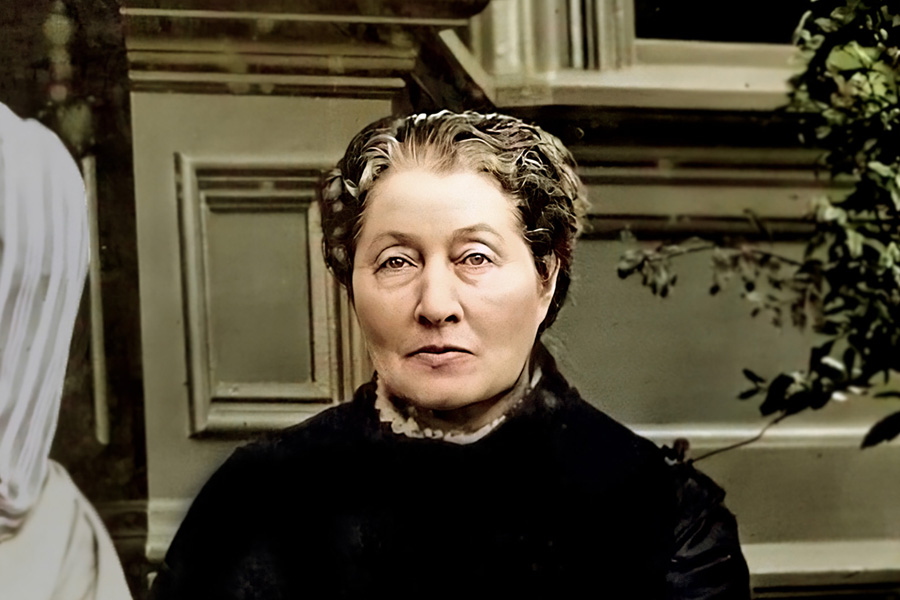
I think of Louisa Wanda Strentzel as a woman who lived at the seam between grandeur and labor. She was born in Texas in 1847, carried to California as a child in 1849, and grew into adulthood inside a family story rooted in orchards, vineyards, letters, and practical responsibility. Her life was not built for public spectacle. It was built like a sturdy house, beam by beam, on work, memory, and family bonds.
Louisa was often called Louie. That nickname feels fitting, because it softens the formality of her name and brings her closer to the living world she inhabited. She was educated, musical, alert, and disciplined. She studied at Miss Atkins’ Young Ladies Seminary from 1859 to 1864, and she became a skilled pianist and violinist. Music was one of her languages, but not her only one. She also learned the language of orchards, finances, household management, and family continuity. That combination made her rare. She was both graceful and anchored, like a vine trained to thrive through seasons of heat and wind.
Her story matters because she stands beside John Muir not as a shadow, but as a force. She was his spouse, yes, but also a manager, critic, mother, correspondent, and keeper of the household’s center of gravity. I see her life as a braided stream. One current ran through family duty. Another ran through business responsibility. Another ran through affection, intellect, and personal sacrifice. Together, they made a life with depth.
The Strentzel Family: Parents, Loss, and Inheritance
Louisa’s family began with her parents, Dr. John Theophile Strentzel and Louisiana Erwin Strentzel. Her father was a Polish-born physician and horticultural innovator whose hands shaped more than one field. He built a large fruit and vineyard operation in Martinez, California, eventually controlling about 2,600 agricultural acres. The operation was not a hobby farm. It was a major enterprise, with orchards, vineyards, and experimental plantings of more than 1,000 varieties of fruit trees and ornamental plants. That landscape became the backdrop of Louisa’s adult life, and it set the tone for everything around her. The land itself seems almost like another family member, always present, always demanding care.
Her mother, Louisiana Erwin Strentzel, was the other half of that household. She married Dr. Strentzel in 1843 and helped build the family life that followed. Louisa was their only child to survive into adulthood. That fact gives her biography a particular tenderness. She had siblings, but the family tree was pruned by tragedy. Her brother John, often called Johnny, died at age nine. Her sister Carlotta, often called Lottie, died as an infant. That left Louisa as the lone surviving child, carrying both inheritance and memory in the same hands.
That kind of family history often leaves a mark that cannot be measured in records alone. I imagine a girl growing up with abundance around her, yet also with the ache of absence. The orchard was lush, but the household knew grief. Louisa’s later steadiness may have grown from that soil. She appears as a woman who understood that life can be fruitful and fragile at once.
When Dr. Strentzel died in 1890, the family estate passed to Louisa. Later, the property and family responsibility moved onward through her daughters. Inheritance here was not just money or land. It was stewardship. It was the expectation that someone would keep the house standing, the trees bearing, and the family memory intact.
John Muir, Marriage, and a Partnership of Unequal Public Visibility
At the Carr home in Oakland, Louisa met John Muir on September 15, 1874. They married on April 14, 1880, in the Strentzel family mansion decked with apple blossoms after being engaged in 1879. The detail sticks with me. Apple flowers are short and brilliant, almost disappearing as they arrive. They married metaphorically for a life of sensitivity, time pressure, romance, and work.
John Muir got famous. Though Louisa never sought stardom, history often gave him the spotlight. She helped maintain a private architecture behind that public image. She administered the ranch, finances, and issued checks for his hotel stays. She was not at home simply waiting. She coordinated, decided, maintained, and absorbed the practical weight that kept his wandering mind going.
Their household was emotionally large. Travel, correspondence, creative memory, parental duty, and temperamental pressure were included. Louisa encouraged John’s writing and excursions while creating home life. In one preserved letter, she speaks warmly and directly about the children and ranch, demonstrating her domestic and financial skills. That letter shows her voice. She wasn’t silent history. History was her topic.
Their marriage endured years of travel and responsibility. The wilderness, mountains, and public cause of John Muir. Louisa had daughters, orchards, home economics, continuity. The two realms were more interdependent than folklore suggests.
The Children: Wanda and Helen
Louisa and John had two daughters, Wanda Muir-Hanna and Helen Muir-Funk. These two daughters are essential to understanding Louisa because they represent the continuation of her life into later generations.
Wanda, born in 1881, was the elder daughter. She grew up in the household formed by ranch land, books, and the constant presence of her parents’ complicated but enduring bond. Wanda later became a key figure in preserving family memory. Her life linked the private world of the Muir home to broader public remembrance. When I look at her place in the story, I see a bridge. She carried the family from one century into the next.
Helen, born in 1886, was the younger daughter. She also became part of the family memory line, helping later generations understand the household, the personalities, and the emotional texture of the Muir home. Children like Wanda and Helen are not footnotes. They are the continuation of a house that once echoed with music, argument, work, and affection. Through them, Louisa’s legacy did not stop at her own lifetime.
The Muir Family Connection
Louisa joined the Muirs by marriage. Daniel and Ann Gilrye Muir had John Muir. He had many siblings: Margaret, Sarah, David, Daniel, Annie, Mary, and Joanna. This extended family concerns because Louisa did not marry privately. She joined an extended family with its own history, migrations, beliefs, and emotions.
John Muir and Louisa’s lives are shaped by their extended relatives. Family was often a constellation in the 19th century. The names, visits, letters, recollection, and obligation passed through it like lantern light in a dark orchard. Louisa joined that constellation while retaining her Strentzel identity.
A Woman of Work, Music, and Endurance
Louisa’s achievements were practical, financial, and human. She was educated. She was musically gifted. She managed a household tied to a major agricultural estate. She handled money and correspondence. She supported a husband whose life was often elsewhere. She raised two daughters. She carried the weight of a family that had endured loss and prosperity in equal measure.
I find her most striking in the balance she maintained. She was not a public reformer in the way some women were remembered, nor a literary celebrity in her own right. Yet the machinery of a family, a ranch, and a marriage moved because she made it move. That kind of labor is often invisible until it is gone. She was the hinge on which many doors turned.
FAQ
Who was Louisa Wanda Strentzel?
Louisa Wanda Strentzel was the wife of John Muir, daughter of Dr. John Theophile Strentzel and Louisiana Erwin Strentzel, and the mother of Wanda Muir-Hanna and Helen Muir-Funk. She was also an educated musician, ranch manager, and important figure in the Strentzel and Muir family histories.
What kind of family did Louisa Wanda Strentzel come from?
She came from a prominent California agricultural family. Her father built a large fruit and vineyard operation in Martinez, and her mother helped maintain the household that supported it. Louisa was their only child to survive to adulthood.
What were Louisa Wanda Strentzel’s main responsibilities?
She managed the ranch household, handled finances, wrote letters, supported John Muir’s travel and writing, and raised two daughters. Her work blended domestic leadership with business stewardship.
Who were Louisa Wanda Strentzel’s closest family members?
Her closest family members were her parents, Dr. John Theophile Strentzel and Louisiana Erwin Strentzel, her husband John Muir, and her daughters Wanda Muir-Hanna and Helen Muir-Funk. Her deceased siblings were John Johnny Strentzel and Carlotta Lottie Strentzel.
Why is Louisa Wanda Strentzel important?
She is important because she helped sustain the family and financial base that supported one of America’s best-known naturalists. She also stands as an example of the educated, capable women whose work held families together while history often looked elsewhere.