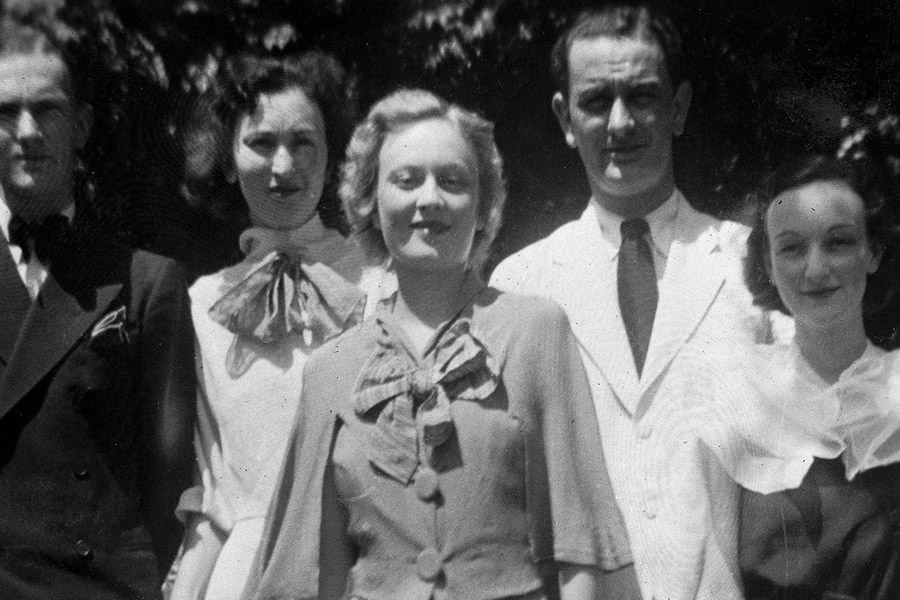
A daughter of Texas and a sister to history
When I look at Josefa Johnson, I see a woman standing near the bright center of American power, yet living mostly in the shadow of other names. She was born on May 16, 1912, in Texas, into a family that was part prairie soil, part political engine. Her life ran through the long corridors of the Johnson family story, where ambition, public service, and private strain lived under the same roof.
Josefa was the daughter of Samuel Ealy Johnson Jr. and Rebekah Baines Johnson. That alone placed her in a family with deep roots in Texas civic life. Her father carried the weight of public service and business struggle. Her mother brought intelligence, discipline, and a strong sense of education. Together, they raised children in a household where politics was not an abstract word. It was a dinner table presence, a weather system, a way of breathing.
Josefa was also the sister of Lyndon B. Johnson, who would rise to the presidency of the United States. But I think it is too easy to define her only through him. She was part of the family circle that shaped him, and she had her own life of marriage, motherhood, and movement through changing roles. Her story is less like a spotlight and more like a lantern seen through a window, steady and human.
The Johnson family web
The Johnson family was huge, layered, and full of branches that extended back into earlier Texas generations. Josefa’s parents were Samuel Ealy Johnson Jr. and Rebekah Baines Johnson. Her siblings included Lyndon Baines Johnson, Rebekah Johnson Bobbitt, Sam Houston Johnson, and Lucia Johnson Alexander. In a family this interwoven, every member seems to be both a relative and a witness.
I think of Josefa as one thread in a finely woven textile. Pull one thread, and the whole pattern moves. Her father, Samuel, had the restless energy of a man attempting to build something substantial while managing financial disasters. Her mother, Rebekah, was educated and capable, the kind of lady who could shape the thinking of a family as much as the home itself. Their children grew up in a family where character mattered, and where public life and private life constantly crossed paths.
Lyndon became the most prominent of the siblings, and his political career dragged the family into national notice. Sam Houston Johnson has a convoluted family history. Rebekah Johnson Bobbitt and Lucia Johnson Alexander complete the portrait of a sibling group that lived inside the same historical weather system, each molded differently by it. Josefa’s presence among them counts because she was not merely close to history. She was inside the family that helped produce it.
Her grandparents on the Baines side were Joseph Wilson Baines and Ruth Ament Huffman. Johnsons included Samuel Ealy Johnson Sr. and Eliza C. Bunton. These names demonstrate the family’s ties to Texas. These origins span law, publishing, farming, local politics, and religion. A family member did not arrive by accident. It was gaining power for generations.
Marriage, children, and the shape of a private life
Josefa’s adult life moved through marriage more than once. She is associated with Colonel William Henry Gaston, Willard White, and later James B. Moss. These marriages suggest a life that changed with the decades, as many lives do. The neat public summary is never the whole thing. Marriage can be a bridge, a storm, a refuge, or a turning point. In Josefa’s case, it seems to have been all four at different moments.
She had a son, Rodney Moss, born in 1948. That fact gives her story a pulse of direct continuity. Family history is not only about famous surnames and political dynasties. It is also about children, birthdays, and the ordinary tenderness of being a mother. Rodney’s life linked Josefa to the next generation, the way a stream links one field to another.
I notice that her story does not come with the usual flood of career titles or public offices. That absence tells its own truth. Some lives are remembered because they dominate public records. Others are remembered because they remain close to the home, the family, the private bargain of love and obligation. Josefa belongs to that second kind of memory. She was near power, but not consumed by it. She was near history, but not reduced by it.
Career, public role, and reputation
Josefa’s professional career is not well-documented. That does not limit her life. It becomes more personal and harder to summarize with headlines. Her role in Lyndon B. Johnson’s rise stands out. His 1948 Senate campaign linked her to his family network, which helped him rise.
Support like that is frequently unseen in formal bios but powerful. Campaigns are more than speeches and votes. They are family voices, quiet errands, little alliances, and trust handed like a flame. Josefa’s role could have been little, but family politics is powerful. It shapes everything silently.
Later writers kept bringing her up when describing the Johnson family, especially in stories about LBJ, Texas politics, and the Kennedy era. That perseverance matters. Her name remains active.
Death and the long shadow of memory
Josefa Johnson died on December 25, 1961, at the age of 49. The date is sharp and strange, Christmas Day, a day when families usually gather in warmth. Her death came early, before the full LBJ era had unfolded on the national stage. That timing adds a kind of ache to her story. She did not live long enough to watch the complete arc of her brother’s presidency.
Her life now survives mostly through family records, genealogical traces, obituary fragments, and references embedded in the larger Johnson story. I find that kind of memory fragile but powerful. It is like a house still standing after the family has moved away. You can see the shape of the rooms. You can imagine the voices. The air is gone, but the structure remains.
FAQ
Who was Josefa Johnson?
Josefa Johnson was the sister of Lyndon B. Johnson and a member of the prominent Johnson family of Texas. She was born in 1912 and died in 1961. Her life connected her to one of the most influential American political families of the 20th century.
Who were Josefa Johnson’s parents?
Her parents were Samuel Ealy Johnson Jr. and Rebekah Baines Johnson. Her father was involved in Texas public life and business, while her mother came from the Baines family and was known for her education and communication skills.
Who were her siblings?
Her siblings included Lyndon Baines Johnson, Rebekah Johnson Bobbitt, Sam Houston Johnson, and Lucia Johnson Alexander. Each was part of the same large Texas family network that shaped Josefa’s world.
Was Josefa Johnson married?
Yes. She was associated with more than one marriage, including Colonel William Henry Gaston, Willard White, and James B. Moss. Her life appears to have moved through different family chapters over time.
Did Josefa Johnson have children?
Yes. She had a son named Rodney Moss, born in 1948. That makes her story not only one of famous relatives but also of direct family continuity.
What is Josefa Johnson remembered for?
She is remembered mainly as a member of the Johnson family and as part of the family support system around Lyndon B. Johnson’s political rise. Her life shows the quieter side of a famous dynasty, where private relationships matter as much as public power.
When did Josefa Johnson die?
She died on December 25, 1961, at age 49. Her death came before the most famous years of her brother’s presidency, which gives her story a sense of unfinished distance.