Introduction to a Forgotten Figure
I often find myself drawn to the shadows of history, those quiet corners where personal stories whisper beneath the roar of grand events. Francis Folger Franklin, born on October 20, 1732, in the bustling streets of colonial Philadelphia, embodies such a tale. He was the cherished son of Benjamin Franklin and Deborah Read, a child whose brief existence cast a long shadow over one of America’s founding families. At just four years old, Francis succumbed to smallpox on November 21, 1736, leaving behind a legacy not of achievements, but of profound loss. His story, like a delicate flame extinguished too soon, highlights the fragility of life in the 18th century.
Benjamin Franklin, his father, was already rising as a printer and thinker by the time Francis arrived. I imagine the household filled with the scent of ink and paper, where young Francis toddled amid stacks of the Pennsylvania Gazette. Deborah, his mother, managed the chaos with quiet strength. Francis, nicknamed “Franky,” brought joy to their world. Descriptions from family letters paint him as bright and affectionate, a boy who delighted everyone around him. His middle name, Folger, nodded to his grandmother’s Nantucket roots, tying him to a lineage of resilient settlers.
The Immediate Family Circle
Diving deeper, I see Francis nestled within a web of relationships that shaped early American history. His parents formed an unconventional union. Benjamin and Deborah entered a common-law marriage on September 1, 1730, after a courtship marked by separations and promises. Benjamin, born January 17, 1706, in Boston, was the 15th of 17 children from his father’s two marriages. He fled apprenticeship under his brother James to build a life in Philadelphia. Deborah, born around 1708, came from humbler stock, her father a carpenter who had hosted Benjamin as a boarder.
Francis had siblings who carried the family forward. His half-brother, William Franklin, born circa 1730 to an unknown mother, was raised in the household. William grew to become New Jersey’s last royal governor, serving from 1763 to 1776, only to clash with his father over loyalties during the Revolution. He married Elizabeth Downes in 1762 and fathered Temple Franklin, but exile to London in 1782 marked his later years until his death on November 17, 1813. Then there was Sarah “Sally” Franklin Bache, born September 11, 1743, after Francis’s passing. She became a patriot, organizing aid for the Continental Army and marrying Richard Bache in 1767. Their eight children included Benjamin Franklin Bache, who founded a newspaper echoing his grandfather’s spirit.
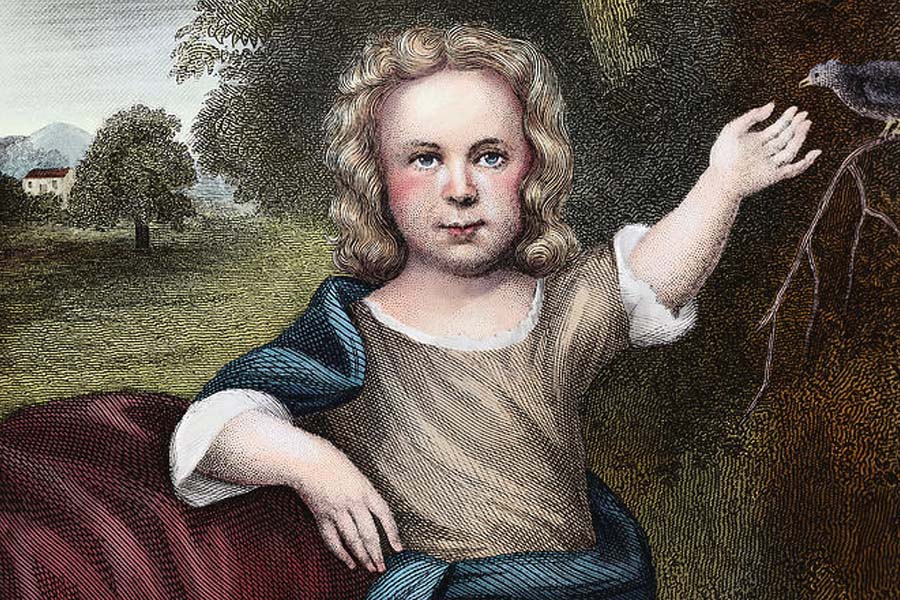
The family’s dynamics intrigue me. Benjamin doted on Francis, regretting in his autobiography-written between 1771 and 1790-that he hadn’t inoculated the boy sooner. Deborah, devastated, commissioned a posthumous portrait around 1736-1737, capturing Francis in innocent repose. This act preserved his image like a frozen moment in amber.
Extended Kin: Grandparents and Beyond
Further investigation reveals grandparents who connected old and modern worlds. Father Josiah Franklin, born December 23, 1657, in England, immigrated to Boston in 1683 as a tallow chandler. He had 17 offspring from two marriages and died on January 16, 1745. Abiah Folger, born August 15, 1667, in Nantucket, was a learned and religious woman who died on May 18, 1752. Peter Folger (1617-1690) and Mary Morrell Folger (approximately 1620-1704), her great-grandparents, established Nantucket and did Native American interpretation.
On Deborah’s side, craftsman John Read died in 1724. His mansion inspired the relationship. His wife, Sarah White Read, helped the family through tough times. Great-grandparents Thomas Franklin (1598-1682) and Jane White Franklin (approximately 1615-1662) were English blacksmiths.
Aunts and uncles colored. Before her death in 1794, Boston bookbinder Jane Franklin Mecom, born March 27, 1712, was Benjamin’s closest sibling and wrote emotional letters. Mary Franklin Holmes (1694-1731) died after marrying a naval captain. Lydia Franklin Scott (1708-1758) and Sarah Franklin Davenport (1699-1731) endured colonial life. A soap boiler uncle, John Franklin (1690-1756), and Philadelphia’s postmaster, Peter Franklin (1692-1766), left little legacies. Benjamin apprenticed to James Franklin (1697-1735), who published the daring New-England Courant.
These linkages weave a tapestry of migration, skill, and intellect. Francis, young and grieving, tied some links and tore others.
A Timeline of Fleeting Moments
To grasp the brevity, I chart his life against the family’s broader arc. Here’s a table outlining key events:
| Date | Event | Details |
|---|---|---|
| January 17, 1706 | Benjamin Franklin’s birth | In Boston, setting the stage for the family. |
| Circa 1708 | Deborah Read’s birth | Future mother, in Philadelphia or England. |
| Circa 1730 | William Franklin’s birth | Half-brother, raised by Benjamin and Deborah. |
| September 1, 1730 | Parents’ common-law marriage | Union amid colonial norms. |
| October 20, 1732 | Francis’s birth | In Philadelphia, joy in the household. |
| September 16, 1733 | Baptism | At Christ Church, honoring Folger heritage. |
| 1734-1736 | Childhood | Amid Benjamin’s printing success; suffers illnesses. |
| November 21, 1736 | Death from smallpox | Age 4 years, 1 month, 1 day; epidemic ravages Philadelphia. |
| December 30, 1736 | Gazette notice | Benjamin clarifies natural infection to promote inoculation. |
| Circa 1736-1737 | Posthumous portrait | Commissioned, preserving his likeness. |
| September 11, 1743 | Sarah Franklin Bache’s birth | Sister carries on the line. |
| January 16, 1745 | Josiah Franklin’s death | Grandfather passes at 87. |
| May 18, 1752 | Abiah Folger’s death | Grandmother at 84. |
| December 19, 1774 | Deborah Read’s death | Mother, from stroke, age about 66. |
| April 17, 1790 | Benjamin Franklin’s death | Father, at 84, in Philadelphia. |
| November 17, 1813 | William Franklin’s death | Half-brother, in London, age about 83. |
| October 5, 1808 | Sarah Franklin Bache’s death | Sister, at 65. |
This chronology reveals how Francis’s death rippled outward, influencing Benjamin’s advocacy for public health. In 1736, with 400,000 annual smallpox deaths in Europe alone, his loss spurred change.
The Impact of Loss
Reflecting on this, I see Francis’s story as a mirror to colonial vulnerabilities. Smallpox outbreaks claimed countless lives, yet inoculation- controversial and risky- offered hope. Benjamin’s regret, voiced in 1772 letters to Jane, lingered like an unhealed wound. The family grieved privately, but publicly, it fueled progress. William’s path diverged amid revolution, perhaps shadowed by early losses. Sarah’s patriotism echoed her father’s, her eight children extending the lineage.
Distant ties fascinate me too. Through the Folgers, Francis connects to James Athearn Folger, born 1835, founder of Folger’s Coffee-a first cousin five times removed. Such links show how one brief life threads through generations.
FAQ
Who was Francis Folger Franklin?
He was the son of Benjamin Franklin and Deborah Read, born October 20, 1732, and died November 21, 1736, from smallpox at age four. Known as “Franky,” he was a beloved child whose death deeply affected his family.
What was Francis’s family background?
His father, Benjamin, was a polymath and Founding Father. Mother Deborah managed the home. Half-brother William became a Loyalist governor. Sister Sarah was a patriot. Grandparents included Josiah and Abiah Franklin, with great-grandparents like Peter and Mary Folger.
How did Francis’s death influence Benjamin Franklin?
It led to lifelong regret, as noted in his autobiography. Benjamin advocated for smallpox inoculation, clarifying in the Pennsylvania Gazette that Francis contracted it naturally, encouraging others to vaccinate.
What extended family members are notable?
Aunts like Jane Mecom, a confidante and bookbinder, and uncles such as James Franklin, a printer. The Folger line ties to Nantucket settlers and later entrepreneurs.
Is there a portrait of Francis?
Yes, a posthumous one from around 1736-1737, possibly by Samuel Johnson, depicting him in period clothing-a rare glimpse into his short life.