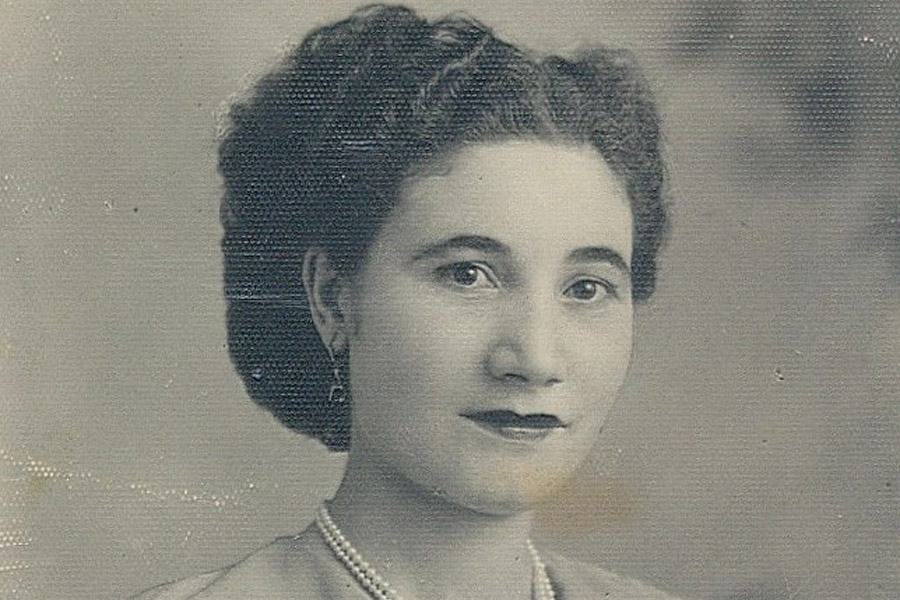
Carmela Costa Hill
Small, tenacious people who keep families together have always fascinated me. These include Carmela Costa Hill. Born in 1912 and died in 1990, her life was a record of regular days and private persistence. I write about her with the interest of someone flipping an old photo over to read the back. The letters read Sicily, Brooklyn, mother, wife, and a life woven into a tangled family saga. I visualize her steady, practical hands and trace the dates and numbers that define a life: 19 March 1912, 5 December 1990, and decades of raising children in a working-class area.
Early origins in Sicily
Carmela arrived from a landscape of stone and sea. Sicily is a word that tastes like salt and bread. She carried with her the habits of a village and the resilience of a woman who knew scarcity. I picture the journey: a young girl or woman crossing the ocean, the years counted in the grooves of a steamship’s wake. Those numbers matter. They place her in the wave of 20th century migration that reshaped cities and families. Her roots in Sicily explain certain rhythms in the household and an appetite for food and rhythm that became the family’s quiet compass.
Life in Brooklyn
Brooklyn became the stage where Carmela raised her children. The address is not a single number but a landscape of stoops, corner stores, and clanging subways. I picture the family kitchen as a small planet where dates and times are orbiting facts. There is the birth of Henry Hill in 1943, which is one of the sharp numbers that anchors Carmela’s later life story. The 1940s and 1950s are decades of hard work, of bills added and subtracted, of children counted at the table. In those years she was a homemaker in a borough that was changing fast. I find it compelling that most of what we can register are the numbers and the events that intersect with more famous stories, yet the ordinary ledger of her life tells an honest tale of survival and love.
Family: Henry Hill
Her son Henry Hill is the figure whose life cast a long shadow over the family name. Born 11 June 1943, he became a public character: a life that later wound into criminal activity, legal entanglements, and public fascination. I do not reduce Carmela to a footnote because of her son’s notoriety. Still, the gravitational pull of his story influences how history remembers the family. I imagine the living room conversations, the friction, and the loyalty. A mother’s presence is constant even when headlines flash.
Spouse: Henry Hill Sr.
Marriage to Henry Hill Sr. structured the family. Carmela’s practical equivalent is an electrician and blue-collar man. Together, they calculated food, rent, and childhood. Such marriages aren’t always celebrated in publications. Grocery lists and mended shoes calculate them. Small maintenance tasks tell a better tale than big events.
Grandchildren: Gregg Hill, Gina Hill, and Justin Hill
The family tree spreads across generations. I pause at the names of grandchildren because they show continuity. Gregg, Gina, and Justin represent three threads that extend from Carmela’s original knot. Names carry persistence. They reveal a line that moved through both private struggle and public exposure. I like to think of each grandchild as a new chapter. Dates blur into decades but the presence of descendants is a concrete measure of legacy.
Extended family connections: Karen Hill, Kelly Alor, and Lisa Caserta
When I explore a family I look at partnerships as weather patterns. Karen, Kelly, and Lisa mark different seasons in the family’s life. Karen was a central figure during the formative and most public years. Kelly and Lisa appear in later chapters. Each relationship shifted the household’s dynamics, producing new alliances and, at times, new fractures. I read these connections as living proof that family is not a static diagram but a moving map.
Timeline snapshot
| Year | Event |
|---|---|
| 1912 | Birth of Carmela recorded as 19 March 1912 |
| 1943 | Birth of son Henry on 11 June 1943 |
| 1980 | Family upheaval and movements related to legal and safety concerns |
| 1990 | Death of Carmela recorded as 5 December 1990 |
I like a table because it makes time feel like steps instead of fog. The numbers keep the story honest.
Personal observations
I find it striking how much of Carmela’s life is recorded by association. She is present in the margins of larger narratives. Yet when I pause on the small details she becomes visible: the immigrant who learned to measure American time in quarter shifts and overtime, the mother who balanced temper and tenderness, the homemaker who became the container for her family’s ambitions and mistakes. I imagine her listening to the radio at night and keeping the stove warm for wayward children. I imagine she kept receipts in a drawer, little paper monuments to daily decisions.
FAQ
Who was Carmela Costa Hill?
She was a Sicilian born woman who emigrated and spent most of her adult life raising a family in Brooklyn. I think of her as a matriarch whose life is measured by dates and domestic work more than by public records.
What are the key dates associated with her life?
I record 19 March 1912 as her birth year and 5 December 1990 as the year of her death. Her son Henry was born on 11 June 1943 and the family experienced major public attention around 1980.
Who were her immediate family members?
Her husband was Henry Hill Sr. Her son Henry Hill became publicly known. Grandchildren include Gregg, Gina, and Justin. Several partners and spouses connected to the family are Karen, Kelly, and Lisa.
What was her occupation and financial status?
She is portrayed as a homemaker and the family is described as working class. I note that public records do not show her as having separate business ventures or notable personal wealth.
Are there records of immigration or origin?
Her origin is Sicily. I see the influence of Sicilian culture in the family story, though the specific immigration documents are not part of this narrative.
How did the family change over time?
Numbers tell part of the story. The 1940s to 1990s span the arc from immigrant household to a family that became entangled with legal and social upheaval. I read the decades as layers that accumulate and alter identity.
What legacy did she leave?
Her legacy lives in descendants and in the steady acts of care that do not always make newspapers. I feel that legacy in the names that continue into the present and in the small domestic rituals that outlast fame.