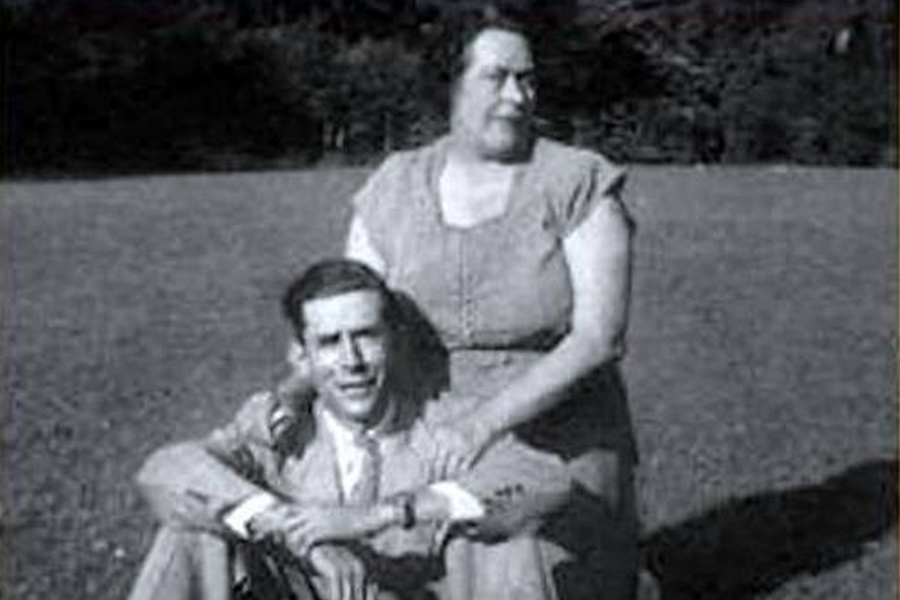
Early life and a tough beginning
I first met Jessie Lillybelle Skipper in the way you meet weather patterns in old stories: through dates, small facts, and the shape of a life that kept returning to the same themes. Jessie was born on 12 Aug 1898 in Butler County. She grew up in a region where hymns, field labor, and the hard economy of early 20th century Alabama wrote themselves into every household ledger. The math of her early years can be written plainly: born 1898, married 12 Nov 1916, mother to several children through the 1920s. Those numbers are more than dates. They are the scaffolding of endurance.
Family and personal relationships
I think of families as slow-moving maps. Jesse’s map contains bold rivers and minor tributaries. Her life revolved around Elonzo Huble Williams. Elonzo Huble Williams Jessie was his 12 November 1916 bride. He worked but couldn’t provide after battle and injury. That change drove Jessie to labor and make dynasty-defining decisions.
They had Ernest Huble Williams on July 5, 1921, who died two days later. Ernest Huble Williams This loss is a knife point on the family map, but I don’t dwell on mourning. On August 8, 1922, Irene was born. Irene Williams and her brother maintained the household.
Then Hank, Hiram, arrived. Hank Williams Born 17 September 1923, he galvanized public attention to Jessie’s modest labor. Hank married, had children, and started a musical legacy. Record sleeves, little club marquees, and family photos bear Jessie’s grandkids and great-grandchildren’s names.
Those branches include Hank Williams Jr. Hank Williams Jr. He inherited a complicated talent and burden along with the last name. The tapestry also included Jett Williams, who fought for Hank Sr.’s daughter status. Jett Williams
Later generations include artists and private citizens. Hank Williams III added punk and metal to the family sound. Hank Williams III Holly Williams sang and wrote. Among the great-grandchildren, Holly Williams Katharine Diane Williams is more quiet. Kate Diane Williams Hilary Williams followed the family voice into studio and composition. Youngest generations include Hilary Williams Samuel, known as Sam. Samuel Williams Each person on the list represents a recurring refrain, current, or island. I admire how Jessie was an anchor and well. She ran a boarding house, worked nights at a hospital, and turned odd jobs into ledgers to feed people and achieve goals. Small, daily victories don’t create headlines.
Work, finances, and the language of survival
I picture Jessie cooking, cleaning, waking up late, registering boarders, and clutching a household cheque. She managed a boarding house and worked in hospitals and factories. She stretched market salaries thin. There is no monument for that kind of commerce, only mental receipts and her children eating.
While brutal, numbers are useful here. Jessie was born in 1898, married in 1916, and ran her Georgiana, Alabama, household by the early 1930s. Her dates place her in the Great Depression and its ripples. Since money was scarce, every decision was little and important. Due of her husband’s handicap, she had to choose between survival and planning. Love’s arithmetic.
The cultural aftershocks: how a mother shaped a musical line
I find a domestic scene more revealing than any single performance. Jessie listened to hymns in church. She listened to itinerant musicians and to the radio. She watched Hank learn a harmonica, later a guitar. Whether she intended it or not she curated a sound world that produced songwriting of rare emotional reach. Her boarding house served as a crossroads. Out-of-town musicians passed through and left traces. That environment was fertile, and talent grew there like grass through cracks.
Recent mentions and public echoes
Jessie herself rarely appears in modern headlines. Her name circulates in family retrospectives, in remembrances timed to anniversaries of births and deaths, and in the casting of biopics. I have seen her described in museum pamphlets, in playbills, and in the margin notes of musician biographies. Her presence is the steady hum behind the louder chords of Hank and his descendants.
Timeline
| Date | Event |
|---|---|
| 12 Aug 1898 | Jessie Lillybelle Skipper born in Butler County, Alabama |
| 12 Nov 1916 | Married Elonzo Huble Williams |
| 5 Jul 1921 | Infant son Ernest born and died two days later |
| 8 Aug 1922 | Daughter Irene born |
| 17 Sep 1923 | Son Hiram “Hank” Williams born |
| 1931 | Family in Georgiana; Jessie runs boarding house |
| 26 Feb 1955 | Jessie dies in Montgomery, Alabama |
| 1950s to 2020s | Descendants: Hank Jr., Jett, Hank III, Holly, and others extend the family legacy |
FAQ
Who was Jessie Lillybelle Skipper in relation to the famous Williams musicians?
I am comfortable saying she was the fulcrum. She is the mother of Hank Williams and the grandmother and great-grandmother to a lineage of musicians and private people. Her life created the conditions that allowed the music to happen.
What were her main jobs?
She ran a boarding house, worked in a cannery at times, and took night shifts at a hospital. Those jobs are the warp threads in the fabric that held the family together.
Did she accumulate wealth or notable property?
No. Her life reads as one of modest means. There are no public records showing great personal wealth. Her estate was not the story. The story was survival and upbringing.
Which family members later became public figures?
Hank Williams was the first to become a public figure. His son Hank Williams Jr., his daughter Jett, and later Hank III and Holly all found public musical lives. Many other family members remained private.
Are there notable dates I should remember?
Yes. Birthdates and life milestones matter here. Jessie: 12 Aug 1898. Hank: 17 Sep 1923. Marriage: 12 Nov 1916. Jessie died 26 Feb 1955. Those dates help anchor the narrative.
Where did Jessie live most of her life?
She lived in small towns and counties in Alabama, moving as work and circumstances required. Georgiana and Montgomery were significant locales in her story.
How do I picture her personality?
I picture her as broad-shouldered in will and practical in love. She is the kind of person who turns poverty into schedule and schedule into habit. She carries a house the way a keel carries a ship.
Did she influence Hank Williams creatively?
Yes. I see her influence in the hymns he heard, the visitors who passed through the boarding house, and the sense of longing and small-town detail that suffuses his songs. Her influence is less explicit than a teacher’s lesson and more like a landscape that shapes every walk you take.