Early life and origins
I begin with a small, stubborn fact: people like to anchor great stories to a place. For Altagracia that anchor is San Cristóbal. I imagine a town of bright sunlight and the hush of small streets around 1864 and 1865, the years most often given for her birth. She arrived into a large family, into the rituals of baptism, marriage, births, the ledger of parish entries that quietly shape lives. I see, in my mind, a woman who would become a lodestone, steady and unflashy, the kind of presence that holds a household together like a keystone holds an arch.
Notable family members
- José Juan de Dios Trujillo Valdez
- Rafael Trujillo
- Ramfis Trujillo
- Flor de Oro Trujillo Ledesma
- Angelita Trujillo
The household and the web of relationships
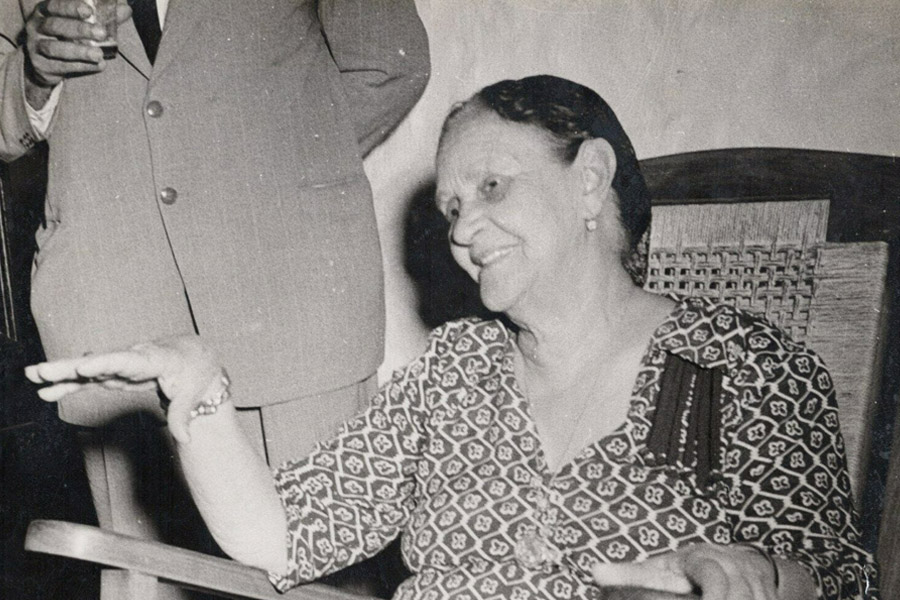
The quiet mechanisms underneath famous faces interest me. Lineage, duty, and ritual drove the Trujillo home. Not much was made of Altagracia. As the family center, her name appears in baptismal documents, marriage certificates, and the occasional portrait where she stands just off to the side while history passes by in uniforms and proclamations. Rafael, one of the 20th century’s most influential leaders, was her husband’s son. Family dinners with numerous dishes, laughter like waves, and Altagracia in the middle, steady as tidal rock, come to mind.
Rafael, her son, dominates family stories. He was the inevitable storm that changed island politics from 1930 and 1961. While watching that storm, Altagracia may have felt pride or confused grief. Her descendants include Ramfis, who tried to follow a violent inheritance, and Flor de Oro and Angelita, who carried the family name into new eras and exile. Family members married, scattered, and left decades of legacy. Our names are like braided ropes—tight, frayed, and rethreaded by marriage or politics.
Career, finances, and the public shadow
If you search for a ledger listing Altagracia as proprietor of businesses you will find almost nothing. That absence is itself telling. She was a matriarch whose public identity was defined through relatives rather than through offices or titles. The story of family finance is written elsewhere: in the rise of Rafael, in national projects, in the concentration of wealth and property that became visible under his rule. I have the sense that Altagracia watched the family fortunes grow and that, as matriarch, she experienced the practical benefits and intangible costs. But the record keeps her as family first and business person second. No large file with her signature as CEO exists in public view. The empire is a household story more than a corporate one.
A timeline of key dates and moments
| Year or Date | Event |
|---|---|
| 1864 or 1865 | Birth of Altagracia in San Cristóbal |
| 1887 | Marriage period reported in family trees |
| 1891 10 24 | Birth of her son Rafael |
| 1930 to 1961 | Period when Rafael exercised national power |
| 1929 | Birth of grandson Ramfis |
| Early 1960s | Death of Altagracia reported variously in records |
Numbers anchor us. They are the pegs we hammer into soft biography. These dates are the bones beneath the story. They do not explain the private conversation over tea, the look across a room, the choices in grief. Still, they are necessary scaffolding.
Memory, myth, and the archive
I have read lists of children, parish entries, and gravestone photographs. Genealogical trees multiply like ivy. Some records agree. Others do not. The human archive is messy. For Altagracia the record is a patchwork: a smattering of dates, a nickname like Mama Julia in family lore, the quiet presence in family portraits. She becomes, in my imagination, a lighthouse whose light was more for a small harbor than for the ship of state. That lighthouse does not get headlines. It gets stories told at kitchen tables.
The texture of daily life
Think of the household as a loom. Threads run back and forth. Altagracia threads many of them. She oversaw births and christenings, perhaps presided over weddings, tended illnesses, and made choices in mourning. The work is invisible when history writes itself through manifestos and military parades, yet it is the work that lets those larger acts stand. If power is a tree then she was part of its root system.
FAQ
Who was Altagracia Julia Molina Chevalier?
I believe she was the matriarch of a large family with deep ties to the political life of the Dominican Republic. Born around 1864 or 1865 in San Cristóbal she became the mother of Rafael and a steady presence through decades of family change.
What was her relationship to Rafael Trujillo?
She was his mother. Rafael was born on October 24 1891. Her role was primarily familial rather than political. She appears in family photographs and records as Mama Julia and as a private matriarch.
Who were her most notable descendants?
Her descendants include children and grandchildren who entered public life. Notable names are her son Rafael, grandson Ramfis, and daughters-in-law and grandchildren such as Flor de Oro and Angelita. These descendants shaped events in the twentieth century and beyond.
Did Altagracia have a public career or business holdings?
No clear public career is recorded for her. The record that survives emphasizes family ties rather than business titles. The family fortunes and holdings are mainly discussed in relation to Rafael and his consolidation of national resources.
When did she die?
Records point to the early 1960s. Genealogical lists offer specific years but they vary. The archive offers dates but often with slight disagreement.
Where can I see records or photographs?
Family photographs and gravestone images appear in private collections and archives. Church and civil registry documents contain many of the birth, marriage, and death entries that form the backbone of what we know about her life.
How should one think about her place in history?
I think of her as the background that made the foreground possible. She is a reminder that history has many hands. Some build monuments. Others tend the hearth. Both are necessary.