Early Life and Heritage
I often find myself drawn to stories of those who bridged worlds, like Hiram Thorpe, a man whose life echoed the turbulent clash of cultures in 19th-century America. Born in October 1852 in Kansas City, Wyandotte, Kansas, Hiram Phillip Thorpe emerged from a lineage that wove European threads with Native American roots. His father, Hiram Grace Thorpe, entered the world in 1813 in Cheshire, New Haven, Connecticut, a blacksmith of Irish or English descent who traded New England’s comforts for the frontier’s raw edge. This senior Hiram served in military campaigns against Native tribes before marrying into the Sac and Fox community around 1845, forging a family amid relocations and resilience.
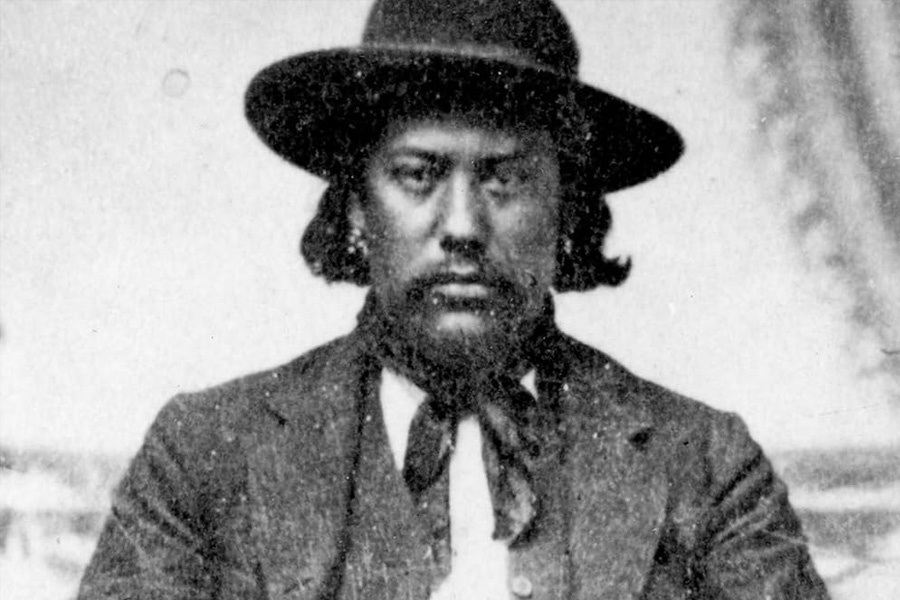
Hiram’s mother, No-ten-o-quah, known as Wind Woman or Grace Francis Thorpe, was a full-blooded Sac and Fox woman, granddaughter of tribal leaders. She passed away sometime between 1879 and 1901, leaving a legacy of strength that Hiram carried forward. Growing up in the shadow of forced tribal migrations—from Illinois to Kansas in the 1840s, then to Oklahoma’s Indian Territory in 1869—Hiram navigated a world of displacement. By his twenties, he stood as a towering figure, over six feet tall and weighing 225 pounds, with a handlebar mustache that framed his stern face. He dressed in white men’s suits, broad-brimmed hats, and boots, a visual metaphor for his blended identity, part settler, part indigenous warrior.
Life in those days tested him like a relentless storm. The Sac and Fox tribe faced assimilation pressures and land allotments, fueling Hiram’s reputed anger toward injustices. He became known as one of the toughest men in the Indian Territory, excelling in running, swimming, and wrestling—skills that foreshadowed his son’s athletic prowess.
Family Ties and Personal Relationships
Exploring Hiram’s family is like unraveling a massive tapestry of ties and heartaches. Charlotte Vieux, born in 1854 and died in 1900, was descended from Pottawatomie chiefs Black Hawk and Louis Vieux. They moved into a simple one-room cedar log cabin on her tribal allotment along the North Canadian River in Pottawatomie County, Oklahoma. No marriage certificate remains, but their 1880 union spawned a happy and tragic brood.
Hiram had up to 19 offspring from several partnerships, matching family legends of polygamy. He had George Jack in 1882, Rosetta from 1882 to 1889, Mary and Margaret in 1883—both lost young—and the renowned twins James Francis (Jim) and Charlie in 1887 or 1888 with Charlotte. Charlie died of pneumonia at nine in 1896. Others were Mary in 1891, Jesse in 1891–1892, Adaline in 1895, Edward in 1898, Richard Hiram, William Henry, and Henry, who died as a baby in 1901.
Hiram had children with Mary James and Sarah LaBlanche before Charlotte, including Minnie, Frank, and possibly others. Hiram married Julia Mixon, a white lady, after Charlotte’s death from childbirth problems in 1900. They had two additional boys. Grandchildren from Jim included Grace Thorpe, an environmentalist and Native rights activist who lived until 2008; Gail; Charlotte; Jim Thorpe Jr., who died at age three from influenza; Carl Philipp, deceased; William; Richard; and John (Jack), who became Sac and Fox chief in the 1980s and died in 2011.
Great-grandchildren like Dagmar Thorpe continue the tradition. Hiram’s arrogance and aggression disrupted relationships. He enrolled little Jim to the Carlisle Indian School in 1904, possibly to navigate culture. In that era’s rural conditions, pneumonia and influenza killed numerous infants.
To map this out clearly, here’s a table of key family members and their roles:
| Family Member | Relationship to Hiram | Birth-Death Years | Notable Details |
|---|---|---|---|
| Hiram Grace Thorpe | Father | 1813-1909 | Blacksmith, military veteran, relocated to Oklahoma in 1869. |
| No-ten-o-quah | Mother | Unknown-~1879-1901 | Full Sac and Fox, granddaughter of tribal leaders. |
| Charlotte Vieux | Primary Spouse | 1854-1900 | Pottawatomie descendant of chiefs, buried in Sacred Heart Cemetery. |
| Mary James | Early Spouse | Unknown | Bore early children like Frank before leaving. |
| Sarah LaBlanche | Early Spouse | Unknown | Part of polygamous phase, children included Minnie. |
| Julia Mixon | Later Spouse | Unknown | Bore two sons after 1900. |
| Jim Thorpe | Son | 1887/1888-1953 | Legendary athlete, twin of Charlie. |
| Charlie Thorpe | Son | 1887/1888-1896 | Died young from pneumonia. |
| Grace Thorpe | Granddaughter | Unknown-2008 | Environmentalist and activist via Jim. |
| Charlotte Thorpe | Granddaughter | Unknown-1990s | Lived long, part of Jim’s line. |
| Jim Thorpe Jr. | Grandson | Unknown (died age 3) | Succumbed to influenza. |
| Dagmar Thorpe | Great-Grandchild | Unknown | Continues the family legacy. |
This web of kinships highlights Hiram’s role as a patriarch, his life a bridge spanning generations amid cultural shifts.
Career, Achievements, and Daily Struggles
Hiram worked hard and persevered like the frontier. He raised crops, horses, cattle, hogs, and poultry on tribal property, working dawn to dusk. He used his physical strength and livestock knowledge to trade horses. He made money by bootlegging whiskey in the dry Indian Territory, defying assimilation rules.
Life was modest and often strained financially. According to family accounts, he lived in poverty. However, his hunting skills and strength earned him renown as a town strongman. After a brief separation with Charlotte, he fathered William Lasley with Fannie Groinhorn in 1893, highlighting his complicated personal life.
Hiram’s world changed constantly. After Charlotte’s death in 1900, he remarried and continued, but fate intervened. At 51 or 52, a hunting accident caused gangrene and death from blood poisoning in 1904. Jim’s prominence highlighted Hiram’s legacy in Garden Grove Cemetery.
A Timeline of Trials and Triumphs
Tracing Hiram’s path feels like following a river through untamed lands—twisting, enduring. In 1813, his father was born in Connecticut. Around 1845, Hiram Grace wed No-ten-o-quah, setting roots in Kansas. Hiram himself arrived in 1852. The family uprooted to Oklahoma in 1869, amid tribal displacements.
No-ten-o-quah’s death came between 1879 and 1901. Hiram’s union with Charlotte around 1880 marked a new chapter, with children arriving from 1882 onward—many lost young. The twins Jim and Charlie brightened 1887 or 1888, near Prague, Oklahoma. Charlie’s death in 1896 brought sorrow. Charlotte followed in 1900.
Remarriage to Julia in 1901 offered continuity, but Hiram’s end arrived in 1904. Posthumously, his father’s passing in 1909 closed an era, with family probate unfolding. Through it all, Hiram’s life numbered challenges: multiple spouses, 11 to 19 children, relocations spanning decades.
FAQ
Who was Hiram Thorpe’s most famous descendant?
Jim Thorpe, Hiram’s son born in 1887 or 1888, rose to become a legendary athlete, Olympic gold medalist, and symbol of Native American excellence. His twin brother Charlie died young, but Jim’s achievements cast a long shadow, often overshadowing Hiram’s own story.
What cultural background defined Hiram Thorpe?
Hiram blended Irish or English heritage from his father with Sac and Fox roots from his mother, making him a mixed-race individual enrolled in the tribe. This duality shaped his life, from Kansas birth to Oklahoma settlement, amid forced migrations and cultural pressures.
How did Hiram Thorpe support his family?
Through farming on allotments, raising livestock, and trading horses, Hiram sustained his household. Bootlegging provided extra income, reflecting his resourceful, sometimes rebellious nature in a territory rife with restrictions.
What caused Hiram Thorpe’s death?
A hunting accident in 1904 led to a severe wound that developed into gangrene and blood poisoning, ending his life at 51 or 52. This sudden loss left his family to navigate without him, enrolling Jim in boarding school shortly after.
How many children did Hiram Thorpe have?
Estimates range from 11 to 19 across relationships, with high infant mortality due to diseases. With Charlotte Vieux alone, he fathered several, including the twins Jim and Charlie, amid a life of polygamy and remarriage.